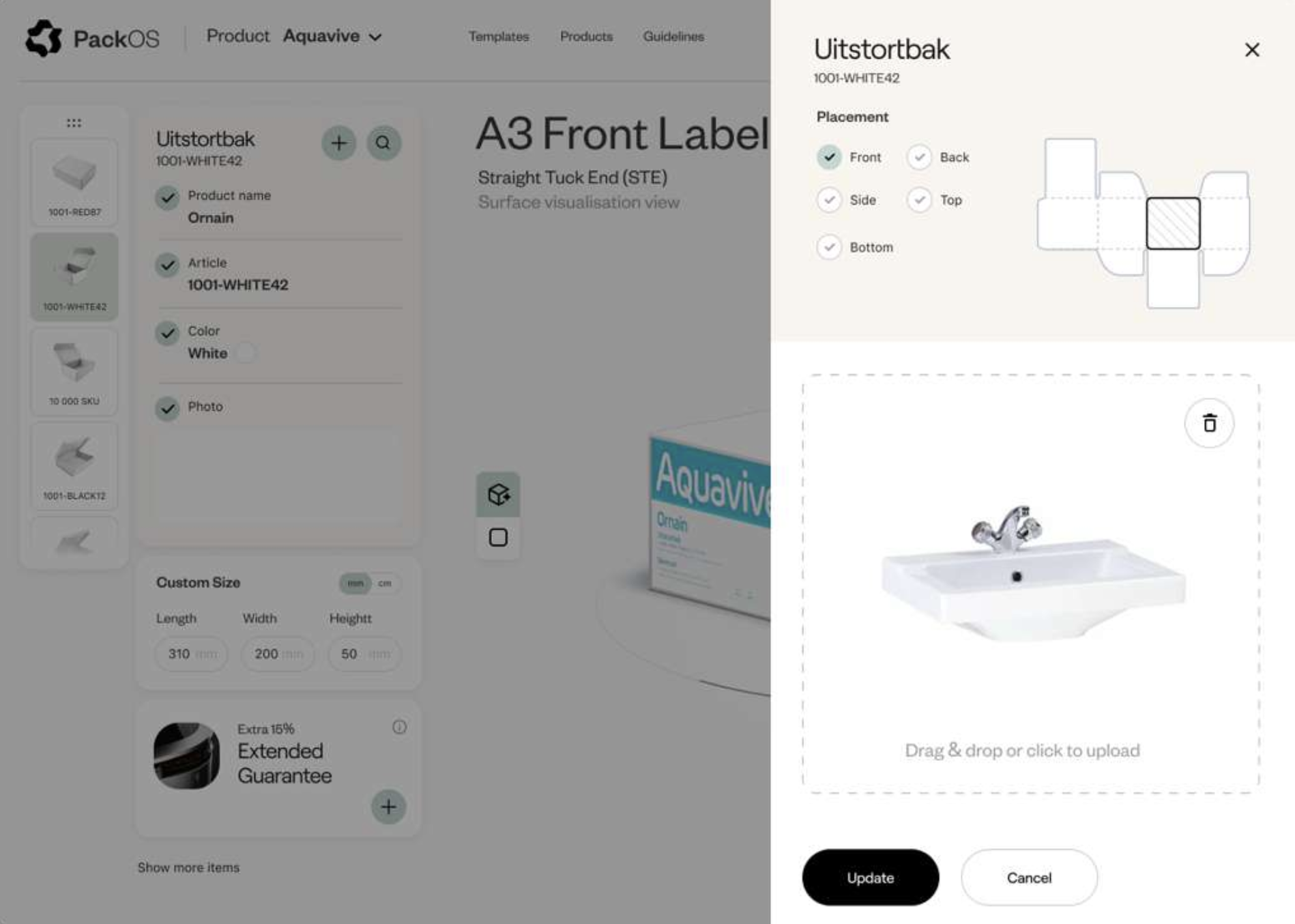
Maxeda DIY Group, the largest DIY retailer in the Benelux, runs Praxis, Brico and BricoPlanit across 334 stores. Wildstream is developing PackOS for the group: an AI-assisted platform that streamlines packaging production across more than 9,000 SKUs and hundreds of suppliers, producing review-ready packaging artwork while preserving human oversight and designer control.
Packaging production streamlined across more than 9,000 SKUs
Packaging production supported across hundreds of suppliers
A deterministic validation layer blocks non-compliant output before human review
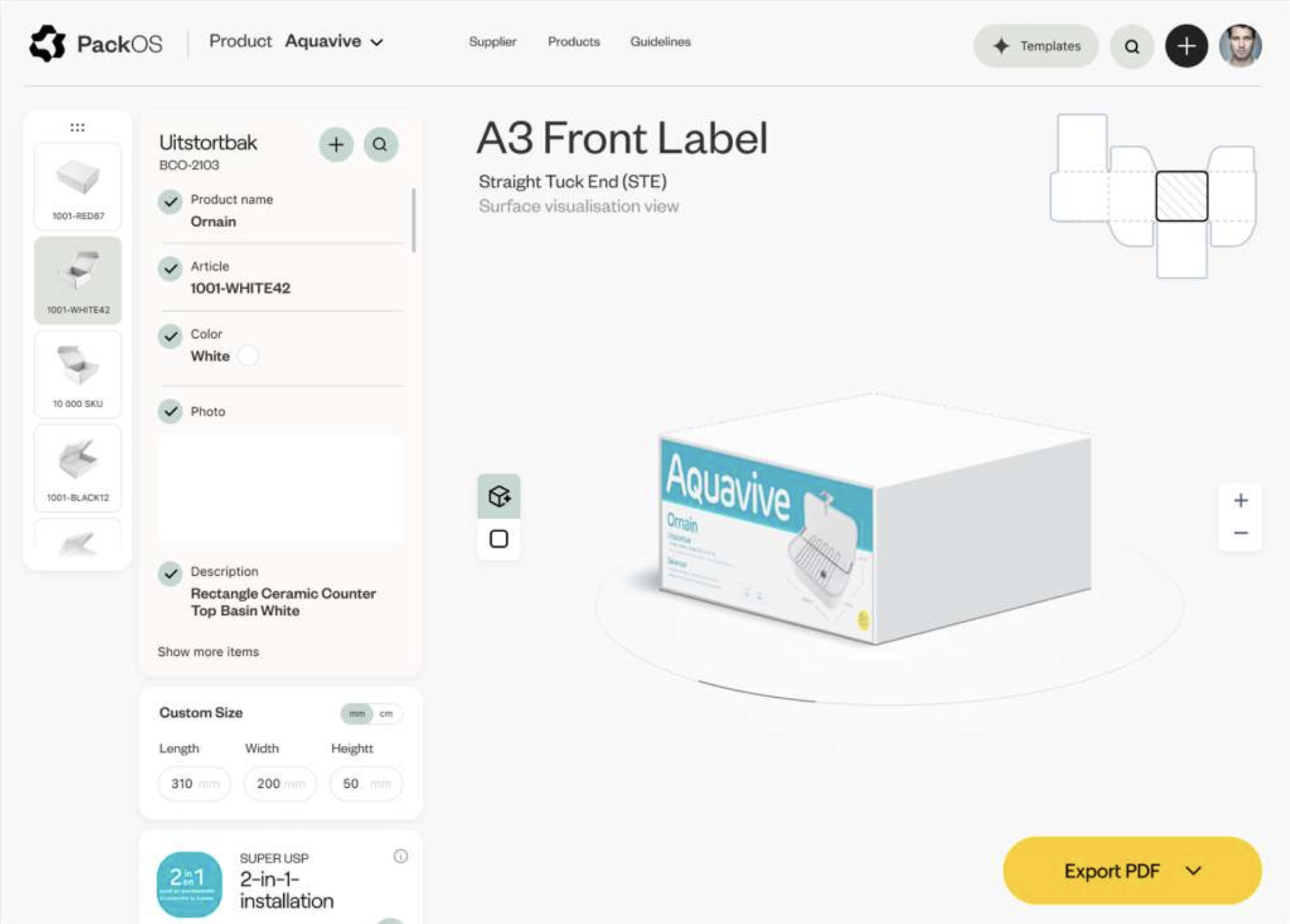
Producing packaging artwork for thousands of SKUs and hundreds of suppliers is slow and manual, and every design must respect strict brand, content and layout rules.
Product data, brand rules and templates are combined to generate packaging artwork that is ready for review.
A deterministic validation layer checks generated artwork against approved brand rules, content requirements and layout constraints before it enters review.
Generated artwork enters human review, so human oversight and designer control are preserved.
Packaging production streamlined across more than 9,000 SKUs and hundreds of suppliers.
Packaging artwork that arrives in review already checked against brand, content and layout rules.
A deterministic validation layer blocks non-compliant output before it reaches human review.
Automation with human oversight and designer control kept in place.
Packaging artwork arrives in specialized design formats that software cannot read or compare consistently, blocking automation at scale.
Computer vision interprets specialized packaging artwork formats and converts their visual structure into a standardized internal representation.
Packaging files in different specialized formats end up in one standardized internal representation.
The standardized representation is what downstream generation and validation work with.
Generation and validation work from one standardized internal representation of the packaging artwork.
Packaging files become readable and comparable for software in one consistent form.
Artwork in specialized design formats becomes usable input instead of a dead end for software.
A standardized input removes the format barrier that blocked packaging automation at scale.
Many design conventions live only in designers’ heads and are never written into brand guidelines, so automated output keeps needing manual correction.
Approved historical layouts and designer corrections help the system learn Maxeda’s implicit design principles, including conventions not documented in formal brand guidelines.
Corrections designers make are fed back to the system, helping it learn Maxeda’s implicit design principles.
The platform’s measurements feed back into generation to improve it, and guide the decision on when output is ready for production.
Tracking rule violations, adjustment rates and editing time keeps improving output quality.
Evaluation results guide when generated output is ready for production.
Design conventions that were never written into brand guidelines become part of how the system generates layouts.
Every correction feeds the system, and adjustment rates and editing time show how much manual correction is still needed.