
A buffet restaurant chain predicts tomorrow’s orders before the kitchen opens.

Colmar runs a growing group of buffet restaurants across Belgium and France, built around generous shared meals and a warm, family atmosphere.

Colmar, Belgium & France · Applied AI

Zero manual ordering

Restocking triggered automatically, just in time

SKU-level forecasts

Daily dish demand predicted per outlet

200+ signals

Weather, events and holidays folded into every forecast
Applied AI

Outlet Revenue Predictor

Buffet-style dining makes demand hard to call in advance. Colmar’s restaurants were over- or under-ordering ingredients against unpredictable footfall, leading to food waste on quiet days and stockouts on busy ones — while wholesalers absorbed the knock-on effect of erratic order volumes.

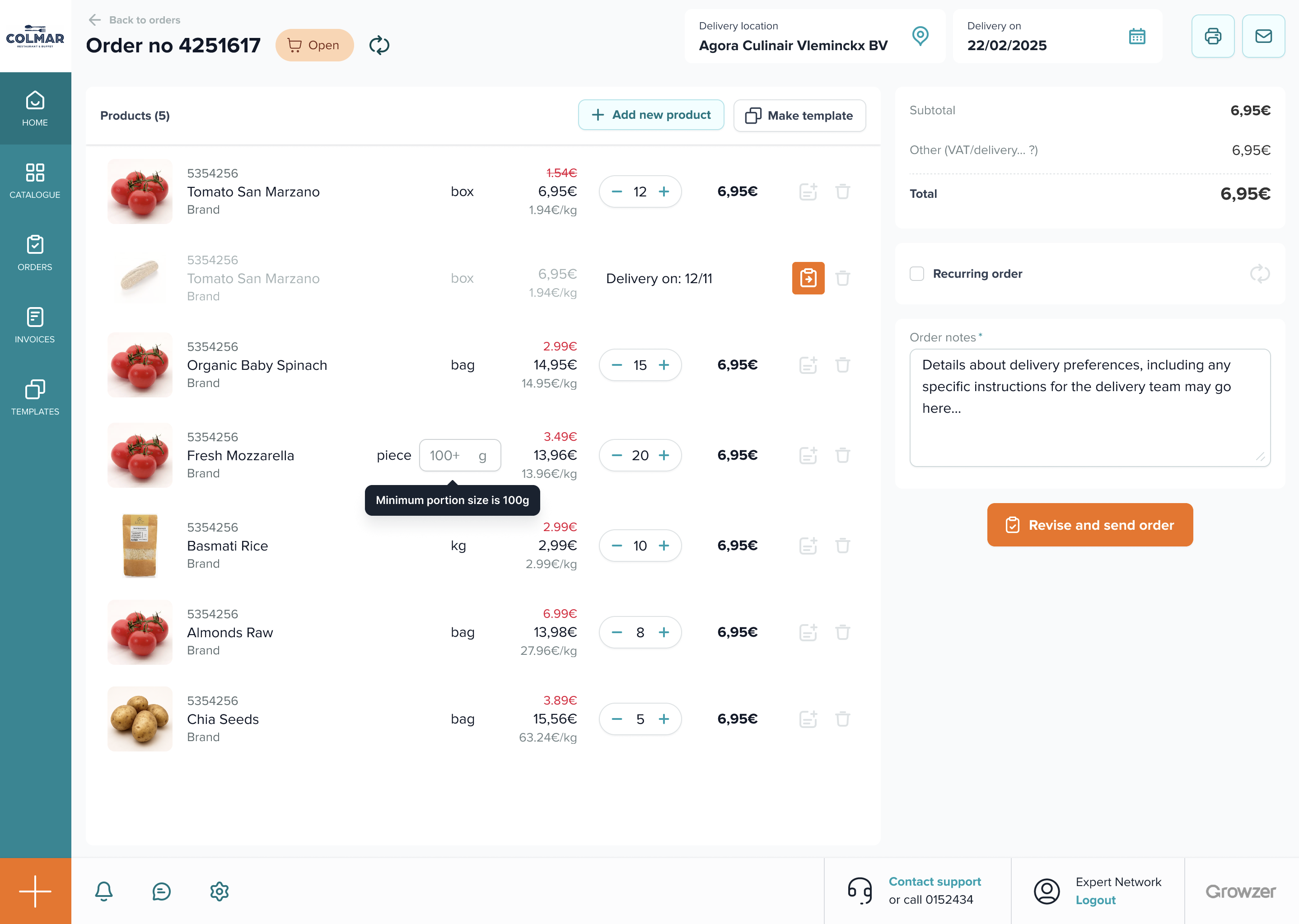
Colmar order detail with product lines, pricing and delivery notes
What we did

A predictive engine plugged into Colmar’s ordering flow, enabling:

  • Daily dish-sales forecasts down to the SKU level, per restaurant
  • Integration of 200+ external factors — weather, local events, public holidays, terrace openings
  • Combination of those external signals with each restaurant’s own historical sales data
  • Fully automatic ordering, with no effort required from restaurant teams
Key Features

Predictive Ordering Engine

Forecasts daily dish sales per outlet and per SKU, turning historical sales into a live, self-updating baseline.

External Signal Integration

Weather, seasonality, public holidays, concerts, sports events and school calendars are folded in as demand multipliers per location.

Automatic Restocking

Forecasts feed straight into Colmar’s ordering flow, enabling just-in-time inventory restocking across the supply chain.

Technology
  • Time Series Forecasting
  • Gradient Boosting / Ensemble Models
  • External Data APIs
  • Historical Sales Modeling
  • Pilot Feedback Tuning
Impact

Turning demand signals into leaner, more reliable ordering

Eliminates manual ordering decisions

Restaurant operators no longer have to guess quantities outlet by outlet.

Less food waste

More accurate demand signals mean fewer over-ordered ingredients thrown away.

Supplier-ready demand forecasts

Predictable order volumes help suppliers plan production and deliveries more efficiently.

Just-in-time replenishment

Restaurants receive the right products at the right time through AI-driven ordering.

Satisfaction across the supply chain

Restaurants keep menu items available, while suppliers benefit from steadier, more predictable demand.

Bring us a challenge like this

Colmar was ordering against unpredictable footfall, outlet by outlet. Tell us where demand forecasting, ordering or food waste is holding the business back, and we will tell you what is worth predicting first.