
Rent A Car is a Belgian family business offering car and van rental to private customers, businesses, leasing companies and assistance companies, from 50 branches across Belgium.
With Wildstream, it is modernizing a complex multi-application landscape, delivered incrementally with full business validation: AI reconstructs the architecture and business rules of undocumented legacy systems, generates regression tests from their current behavior and turns impact and feasibility analysis into a phased migration roadmap. In the contact center, AI-classified calls are linked to tickets and rental contracts, showing where customers get blocked.
Legacy architecture and business rules reconstructed from code, validated by experts
AI-generated regression tests make refactoring safe before the first change
Every call classified by AI and linked to its ticket and rental
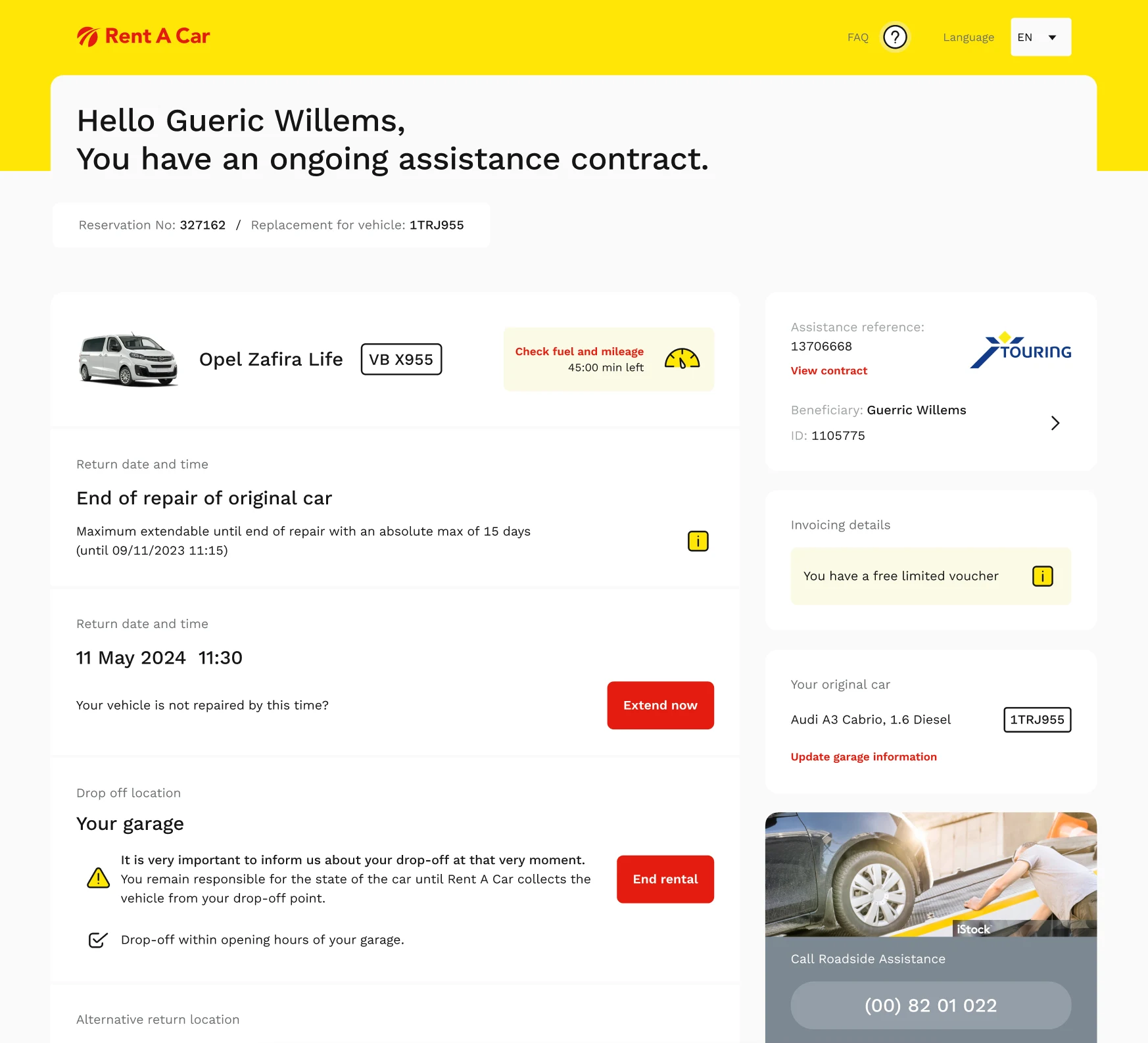
Undocumented legacy applications depend on institutional knowledge, making discovery slow and modernization risky. Teams have to work from aging documentation, and analyzing the systems by hand invites errors.
Automated analysis of code and dependencies replaces manual discovery, so modernization can start sooner.
Draft specifications are checked with business experts and senior engineers, giving every later step a reference teams can trust.
Architecture, business rules and integration flows are read directly from the code, not from aging documentation or a few people’s memory.
The analysis covers code and dependencies across applications and interfaces, and the draft specifications of current system behavior are validated with business experts and senior engineers, giving teams a validated specification baseline from the start.
Code and dependency analysis across applications and interfaces.
Generation of specifications and technical documentation, reconstructed from what the code actually does.
A Senior AI Engineer ensures quality, security, traceability and governance, with human-in-the-loop validation embedded throughout delivery.
Automated analysis replaces hand-reading of code and dependencies, removing the mistakes that creep into manual discovery.
Specifications are rebuilt from what the code actually does, so teams no longer depend on outdated documents or a few colleagues’ memory.
AI output is reviewed and shaped into specifications and documentation engineers can work from directly, rather than raw drafts.
New team members get up to speed from documented systems instead of relying on colleagues who know the code.
Missing test coverage makes it unsafe to refactor legacy code without breaking existing behavior. Preparing tests by hand for poorly documented systems is slow and error-prone.
Regression tests are generated from what the system does today, so refactoring starts with a safety net already in place.
Legacy code can be restructured step by step, with every change checked against the behavior users rely on.
Tests and specifications come out of one automated analysis instead of hand-written preparation, cutting the mistakes manual work lets in.
The tests are generated alongside specifications and technical documentation from the same analysis of source code and technical artifacts, and the results are validated with business experts and senior engineers.
Regression tests are generated from the system’s current behavior, so coverage reflects what the application really does.
Generation of specifications, tests and technical documentation from the same analysis.
A Senior AI Engineer ensures quality, security, traceability and governance, and turns AI output into usable engineering assets.
With verified coverage in place, legacy systems can be modernized incrementally, guided by value, feasibility and risk.
Every refactoring step is checked against tests that capture current behavior, so existing functionality keeps working as the code changes.
Automated regression checks replace manual retesting, so changes can move to release sooner.
Teams see straight away when a change alters existing behavior, before it reaches users.
Big-bang rewrites of multi-application landscapes carry high risk, hidden dependencies and unclear investment priorities. Integrations are fragile, and leadership needs a clear basis for deciding which modernization efforts come first.
The landscape is modernized in phases, each small enough to validate with the business before the next one begins.
Interface contracts and data flows are mapped with AI-assisted analysis, so hidden links between applications show up before anything changes.
Each modernization effort is ranked by risk, business impact and delivery readiness, giving leadership a clear basis for what comes first.
All interface contracts and data flows are made explicit before changes begin, leadership gets a clear basis for prioritizing modernization efforts, and modernization proceeds incrementally instead of as a big-bang rewrite.
AI-generated impact analysis and phased roadmaps reduce big-bang rewrite risk and surface hidden dependencies early.
All interface contracts and data flows are mapped using AI-assisted analysis, making integrations explicit before changes begin.
AI-assisted feasibility analysis helps leadership prioritize modernization efforts by risk, business impact and delivery readiness.
Leadership sees the risks and quick wins of each modernization effort up front, so investment goes first where it pays off soonest.
A complex multi-application landscape is modernized step by step, with each step validated by the business before the next one starts.
Each phase is small enough to validate and roll out on its own, instead of one large switch-over.
Quick wins identified in the roadmap can go live first, while larger changes are still being planned.
Customer calls, support tickets and rental records are disconnected, making it difficult to identify why customers call, where they encounter blockers and which rentals are affected. The contact center logs around 1,500 phone conversations a day, but calls sit in Genesys, tickets in Zendesk and rentals in the rental system, unlinked. Reporting counts calls and tickets, and work that never becomes a ticket stays invisible.
Every call from April to June 2026 was transcribed and classified by AI with a reason, an outcome and what blocked it.
Garage-related calls take a large share of the volume but rarely become tickets — work that ticket reporting never showed.
Almost a third of agent tickets can’t be traced to a rental. Linking calls, tickets and contracts now puts a number on that gap.
Calls, tickets and eight rental tables are synced every night, and each call is linked to its ticket, reservation and contract, so every call reason can be read against the rental it concerns.
Every transcribed call gets a reason, an outcome and what blocked it, against a fixed schema. Low-confidence labels stay out of the counts.
Calls, tickets, contracts, extensions and driver-platform actions joined per rental, so each call reason is read against the contract.
Every chart opens the rows behind it, down to one call with its AI-read reason and blocker, the linked ticket and the contract.
Dedicated pages for workload, garages, extensions and returns.
Claude Opus writes daily briefs from the classified call data.
Genesys, Zendesk and the rental database are accessed read-only, and the Anthropic API runs under Rent A Car’s own organization key.
Reporting shows why customers call and what blocked them, instead of only counting calls and tickets.
€0 extensions were being charged at check-in.
Calls, tickets and rental records sit in one linked dataset that service, fleet and logistics teams all work from, instead of three separate systems.
The classified, linked call data lays the groundwork for agent feedback loops and specialized AI agents built on real customer conversations.